

CALL (Computer-Assisted Language Learning)
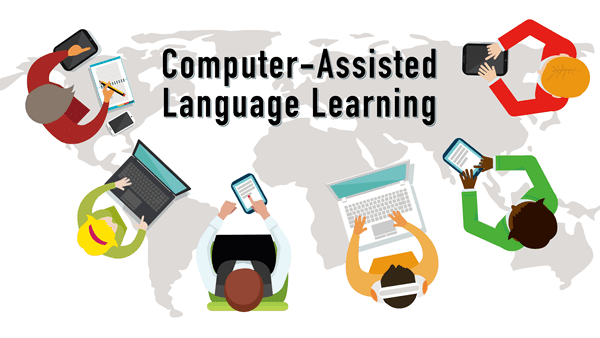
CALL’s origins and development trace back to the 1960 ’s Delcloque 2000 Since the early days CALL has developed
into a symbiotic relationship between the development of technology and pedagogy. Since the emergence of computers,
there has been an attempt to transmit teaching through them, despite all the different transitions of its development,
today it has become widely used by many teachers and students.
On the other hand, CALL most of the time is mistaken as a method however, it is an approach to language teaching
and learning based on the use of technology in which you can transform the traditional English classroom,
using unstructured interactive lessons and pedagogical activities through the use of CALL.
It is a way for students to promote themselves to have autonomous learning, and it will help to facilitate
the language learning process.
Characteristics of "CALL"


Warschauer (1996) divides CALL history into three phases:
The first phase is "behavioristic" which focuses on stimulus, response, reinforcement, etc. That means students learn through imitation and repetition. and the teacher gives immediate feedback because pupils have to pass to other difficult levels in any topic. the main characteristics of behavioristic CALL are:
Drill and practice ._ Activities in digital resources such as socrative, quizziz, etc.
Computer as a tutor.- Learning activities promote language accuracy rather than fluency.
The second phase is "communicative" which focuses on the functions of the language which means an emphasis on the language rather than usage. in this part, grammar is implicity because as above of the text said that encourages students to produce language. and the last phase is "integrative" which is divided into two parts: "multimedia CD-ROM and internet application. This phase focuses on the meaning and interactive learning, the students have to use meaningful, and contextualized materials. also is focus on the learners' factors such as interest, learning styles, experiences, age, motivation, and among others.


2 Comentarios
Thanks for sharing with us this important information, it's interesting to know how technology has changed in education, as well as the advances and methodologies such as call, Icall, well etc and among others. Help to improve more the teaching and learning in a second language such as English. How as a teacher we can add this resources in our classes. Amazing information!
ResponderEliminarThanks for sharing with us information about the stages of CALL because through this phases we can develop different activities for our students. Because through this we can take into consideration about the students' styles, motivation, materials, digital resources, etc.
ResponderEliminar